Getting there and back, the season and the night itself
Ramayana Ballet night: getting there
How to reach the Ramayana Ballet at Prambanan and get back after dark, open-air or indoor by season, and what you see and hear on the night.
Check dates and availability ↗Quick answer
The Ramayana Ballet stage is just west of Prambanan Temple, about 17.6 km from Yogyakarta city. Getting there is easy by car, ride-hail, Trans Jogja bus or the KRL commuter train to Brambanan station. Getting back is the hard part, because the show ends after the city buses stop. Arrange a driver or a booking with hotel transfer before you go, and arrive 30 to 45 minutes before the 19:30 start.
Where the stage is
The Ramayana is staged at its own theatre complex just west of Prambanan Temple, in Kalasan, Sleman, on the Yogyakarta side of the border with Central Java. The operator puts it about 17.6 km from Yogyakarta city and 7.8 km from Adisutjipto airport and Maguwo station, 15 to 20 minutes by road from there. The open-air stage and the smaller indoor Trimurti theatre are close together. Set your map to the Ramayana Ballet Prambanan theatre rather than the temple. If you've booked with a guide, you meet them next to the Ramayana Ballet sign at the theatre.
Getting there: four ways
Getting out to Prambanan before the show is the easy half. Prambanan lies north-east of the city, on the way to Solo, so a car or ride-hail is the simplest choice and takes you to the door. Public transport works too on the way out, with a short walk at the end. Whichever you choose, leave a margin for traffic on top of the operator's advice to arrive 30 to 45 minutes early.
- Car or ride-hail: the simplest, straight to the theatre
- Trans Jogja bus: the Prambanan stop is about 800 m from the stage
- KRL commuter train: Brambanan station is about 1.3 km away
- A booking with hotel transfer: a private car both ways
Getting back after the show
Plan the return before you leave your hotel. On the official schedule the show finishes about 90 minutes after its 19:30 start, and Trans Jogja's buses have stopped by then. The KRL commuter line may still run, but Brambanan station is a 1.3 km walk in the dark, so check the last train to Yogyakarta in the KAI Commuter app before you rely on it. Ride-hail apps work, but you'll be booking at the same moment as everyone else leaving the theatre. A driver who waits for you, or a booking with hotel transfer, takes the guesswork out of the end of the night.
Read next: Getting Around Yogyakarta
Open-air or indoor: the season
From May to October, the dry season, the Ramayana plays on the open-air stage with Prambanan's temples lit up behind the dancers. From November to April, the rainy season, it moves to the covered Trimurti theatre, a smaller indoor hall where the dancers and live gamelan are the same but the temples aren't in view. Even in the dry months, rain before the start sends the show indoors, and rain after 45 minutes or more ends it with no refund. From January to April the operator also runs an earlier, shorter Saturday show outdoors on the Amphi Theatre, danced to recorded music.
Read next: The Best Time to Visit Yogyakarta
Timing your evening
The Ramayana starts at 19:30 on Tuesday, Thursday and Saturday. The operator recommends arriving 30 to 45 minutes early for ticket checks and warns that late arrivals may have limited access. If you book with a provider, your meeting or pickup time is in the booking calendar and your confirmation. To make a day of it, visit Prambanan Temple first. The temple needs its own ticket, and the temple-and-ballet tour on this site picks you up in the mid-afternoon for a guided visit of about two hours before the show, then takes you back to your hotel afterwards.
What you see and hear
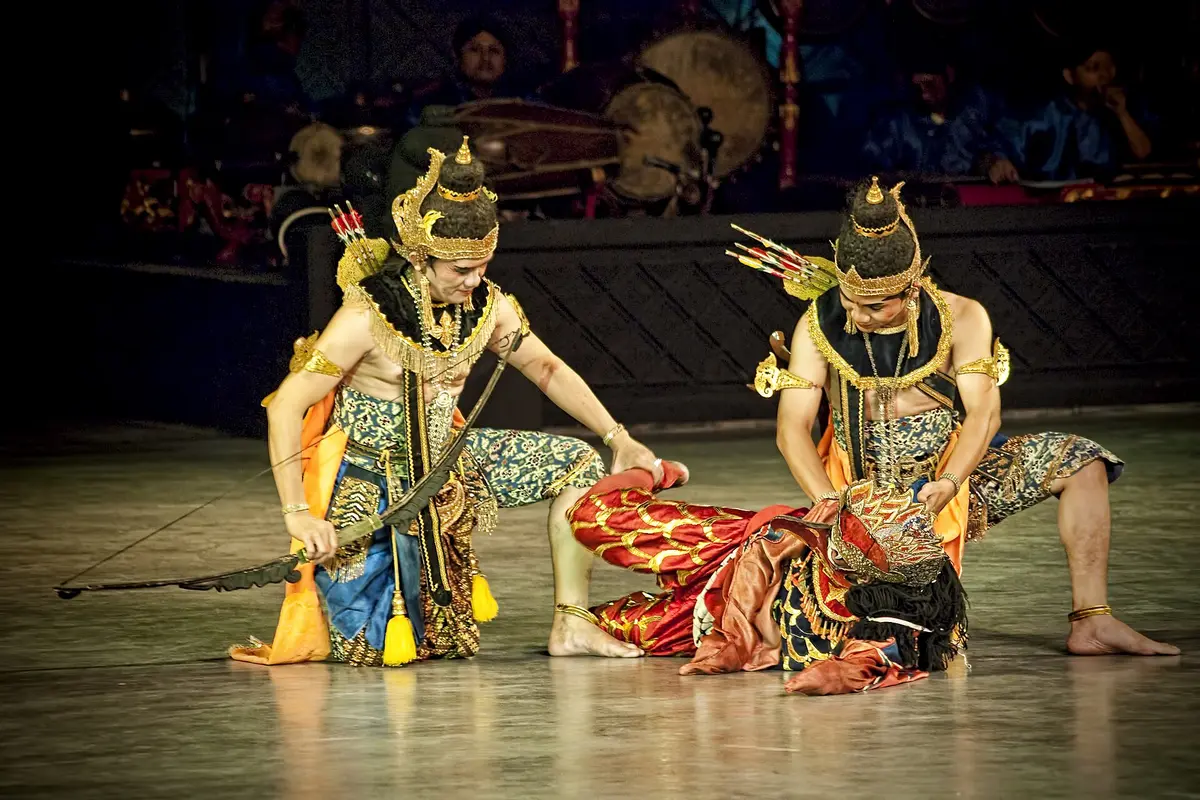
The Ramayana Ballet is a form of wayang wong, the Javanese dance-drama that began as entertainment in the royal palaces of Yogyakarta and Surakarta. Nobody speaks. The story is carried by dance, costume and a live gamelan orchestra of gongs, drums and other percussion, played in full view at the side of the stage. Watch how the characters move. Refined heroes such as Rama dance in the refined alus style, slow, elegant and smooth, while demons and ogres use the coarse kasar style, broad and forceful. Once you spot that contrast, you can tell the heroes from the villains without a programme.
The story, and the temple behind it
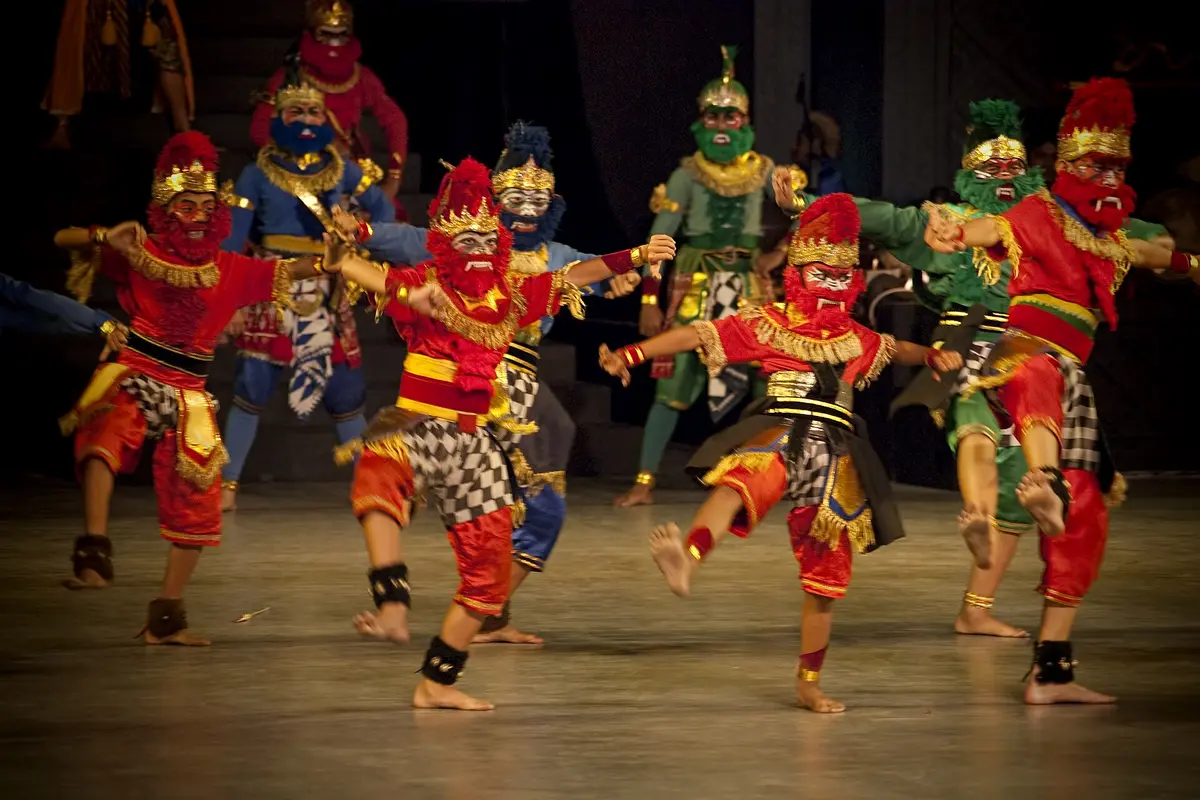
The plot follows Prince Rama and his wife Sinta, who is kidnapped by Rahwana, the demon king of Alengka. Rama wins her back with the help of the monkey Hanuman and an army of monkey allies. The temples behind the stage tell the same epic in stone: Prambanan's main Hindu temples are decorated with reliefs illustrating the Ramayana, and the site has been on UNESCO's World Heritage List since 1991. Read the outline before you go, and the evening turns from a spectacle you admire into a story you can follow.
Read next: The Ramayana as Danced at Prambanan: Follow the Story
Language, length and children
Language is no barrier, because nobody speaks on stage, and the provider's guide speaks English. The show runs about 90 minutes, and with no dialogue to follow it works for children who can sit through a late evening; the finish is the main issue for small ones. In Class I and Class II you sit in an unnumbered section, so arriving early is how a family sits together. If that matters, a numbered Special or VIP seat removes the question. This booking isn't suitable for people with heart problems, and alcohol and drugs aren't allowed.
What to wear and bring
There's no published dress code, and the provider asks only for comfortable clothes. In the dry season you'll be sitting outdoors in the evening, so insect repellent and a light layer are sensible, and a phone torch helps on unlit paths afterwards. In the indoor months, bring an umbrella for the walk between your car and the theatre. Save your booking confirmation and your driver's phone number on your phone before you leave, so you can find both even if you can't get online when the crowd leaves.
Accessibility
The operator doesn't publish accessibility details for either theatre, so ask before you book rather than on the night. If you use a wheelchair or can't manage steps, message the operator through the contact details on its official site, or ask the provider, and say which stage your date falls on. A numbered Special or VIP seat means you don't have to look for space in an unnumbered section, and a booking with a hotel transfer means you aren't relying on a long walk from a bus stop or station.
Who this isn't for
If you can't face a late return to Yogyakarta without a ride arranged, don't book ticket only and hope for the best. If your trip falls between November and April and the floodlit temples are the point, this isn't your season. This booking isn't suitable for people with heart problems. And if your dates miss Tuesday, Thursday and Saturday, you can still see the Ramayana as wayang wong in central Yogyakarta, at Purawisata near the Kraton, where it's staged on many more nights.
Frequently asked questions
How do I get back to Yogyakarta after the Ramayana Ballet?
Arrange it before you go. Trans Jogja buses have stopped by the time the show ends, and Brambanan station is 1.3 km away. A driver who waits, or a booking with private hotel transfer, is the reliable choice. Ride-hail works, but you'll be booking alongside the rest of the departing audience.
Is the Ramayana Ballet outdoors in the rainy season?
No. From November to April the Ramayana is performed in the covered Trimurti theatre. From May to October it's on the open-air stage with the temples behind. Rain before the start can move a dry-season show indoors.
How far is the Ramayana Ballet from Yogyakarta?
The operator puts it about 17.6 km from Yogyakarta city and 7.8 km from Adisutjipto airport. The theatre is just west of Prambanan Temple, about 800 m from the Prambanan Trans Jogja stop and 1.3 km from Brambanan station.
Do I need to understand Javanese to follow the Ramayana Ballet?
No. There's no spoken dialogue: the story is told through dance, costume and live gamelan music. Reading a short outline of the Ramayana beforehand helps you follow who's who.
Can children watch the Ramayana Ballet?
Yes. There's no dialogue to follow and the show runs about 90 minutes from 19:30, so the late finish is the main issue for young children. Class I and Class II seats are unnumbered, so arrive early if you want to sit together.
What should I wear to the Ramayana Ballet?
Comfortable clothes. No dress code is published. For the open-air stage, bring insect repellent and a light layer for sitting outside in the evening, and an umbrella in the rainy months.
Sources
- Ramayana Ballet Prambanan tickets and schedule (InJourney Destination Management)
- Ramayana Open Air Stage: location and access (InJourney Destination Management)
- Ramayana Trimurti Indoor Theatre (InJourney Destination Management)
- Prambanan Temple Compounds (UNESCO World Heritage Centre)
- Brambanan railway station (Wikipedia)
- Trans Jogja (Wikipedia)
- Wayang wong (Wikipedia)